Social Impact Explanatory Cards
Overview
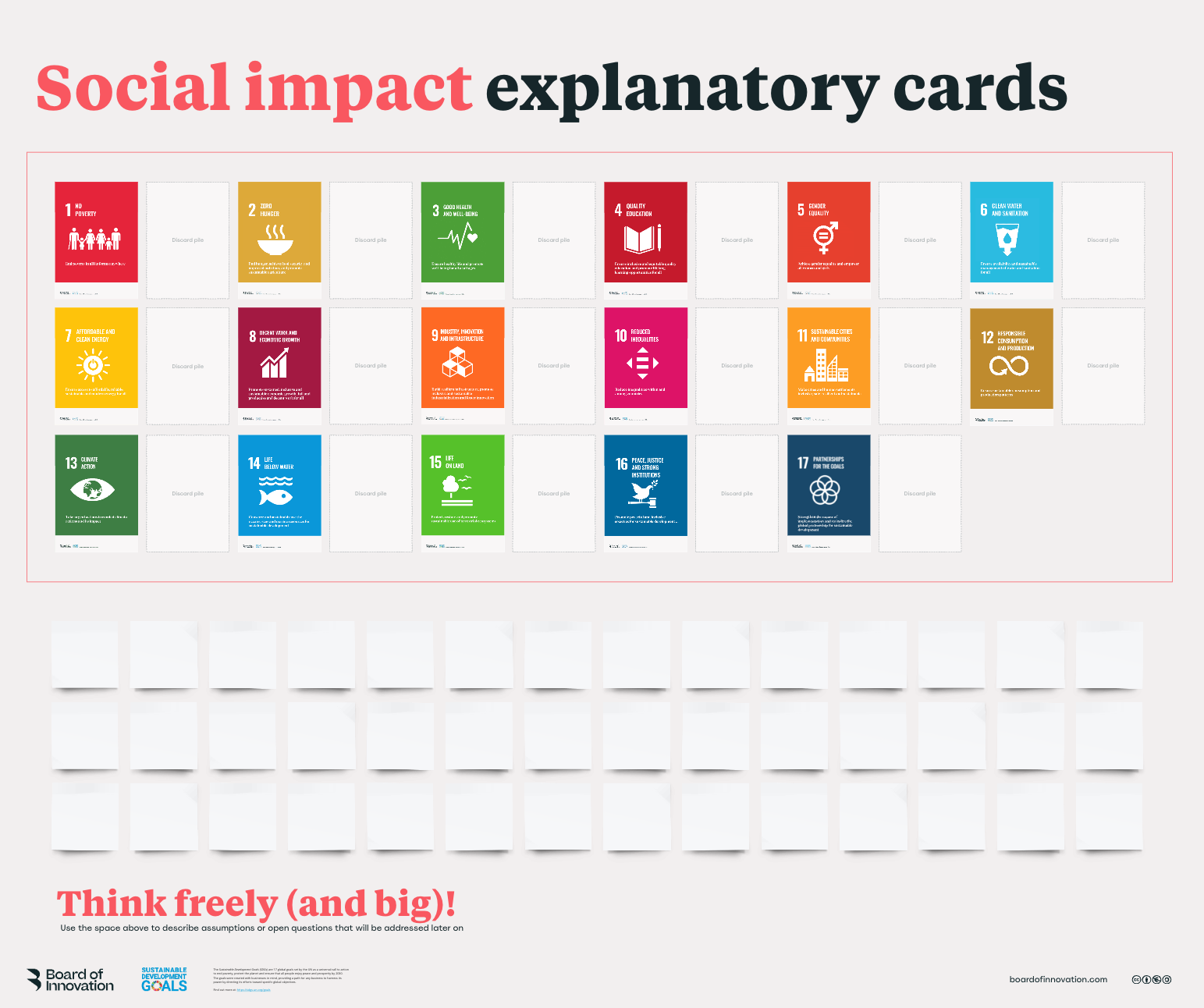
Social Impact Explanatory Cards is an educational tool designed to enhance understanding and engagement with the Sustainable Development Goals (SDGs). It serves as a practical resource for individuals and organizations aiming to integrate sustainability into their operations and strategies. By breaking down the complex topics of the SDGs into digestible information, these cards facilitate learning and inspire action towards achieving the goals. They are versatile and can be employed in various settings, including academic institutions, and businesses.
Dimensions
Resource type: These cards are educational tools that provide concise information and insights into the SDGs.
- Tags: tool, educational-material
Objective: The primary goal of Social Impact Explanatory Cards is to educate and inform users about the SDGs and to foster a deeper understanding of their targets and implications.
- Tags: map, assess
Target audience: These cards are designed for a broad audience, including those involved in sustainable entrepreneurship, education, and policy-making, who are interested in understanding and contributing to the SDGs.
- Tags: entrepreneurs, researchers, students, policy-makers, educators, practitioners
Sustainability focus: The focus of these cards is on awareness and understanding of the SDGs, which encompass social, economic, and environmental objectives.
- Tags: SDGs
Innovation type: While not directly related to innovation, these cards support social innovation by providing knowledge that can inspire new approaches to sustainable development challenges.
- Tags: social-innovation
Entrepreneurship stage: Applicable across various stages of entrepreneurship, these cards are particularly useful during the ideation and design phases, where understanding the SDGs can influence sustainable business models.
- Tags: ideation, design
Scope of relevance: The SDGs are global in nature; therefore, these cards have a global relevance but can also be applied to regional, national, or local contexts.
- Tags: global, regional, national, local
Methodological approach: The cards use an educational approach to convey information and do not prescribe a specific research or problem-solving methodology.
- Tags: educational-material
Skill development: By using these cards, individuals can develop a range of skills, including systems thinking, environmental awareness, and innovative thinking. Noteworthy, these cards are mainly relevant for raising awareness.
- Tags: systems-thinking, environmental-awareness, innovative-thinking
Source and credibility: The information on these cards is typically derived from the United Nations and other reputable sources that have established the SDGs. In effect, the cards are exemplification and simplification of SDGs.
- Tags: government-sources, reputable-industry-sources
Prerequisites and requirements: These cards are designed to be accessible to a wide audience, with no specific prerequisites required to understand and engage with the content.
- Tags: none
Collaboration level: Social Impact Explanatory Cards encourage collaboration by prompting discussions and collective efforts towards achieving the SDGs.
- Tags: individual, team, community
More information can be found at Board of Innovation
Resources
Before using this tool, you should know...No prerequisites required • beginner level
Great news! This tool has no specific prerequisites and is accessible to all users.
Note: Designed to be accessible with no specific prerequisites required.
Tool Compatibility
See which tools work well alongside Social Impact Explanatory Cards, and which overlap with it enough that you may only need one
Complementary Tools (10)
These tools work well together with Social Impact Explanatory Cards
Adds assessment to the mapping this tool provides, bringing social sustainability into view.
Adds mapping to the assessment this tool provides, bringing environmental sustainability into view.
Adds strategic alignment to the assessment this tool provides, bringing environmental sustainability into view.
Adds strategic alignment to the assessment this tool provides, bringing environmental sustainability into view.
Adds assessment to the mapping this tool provides, bringing environmental sustainability into view.
Adds assessment to the mapping this tool provides, bringing environmental sustainability into view.
Related Pages
Discover related resources based on shared tags and topics
Biomimicards Game
tools
Social Impact Wheel
tools
Circular Canvas
tools
UCD Impact Planning Canvas
tools
Cambridge Value Mapping Tool
tools