Cambridge Value Mapping Tool
Overview
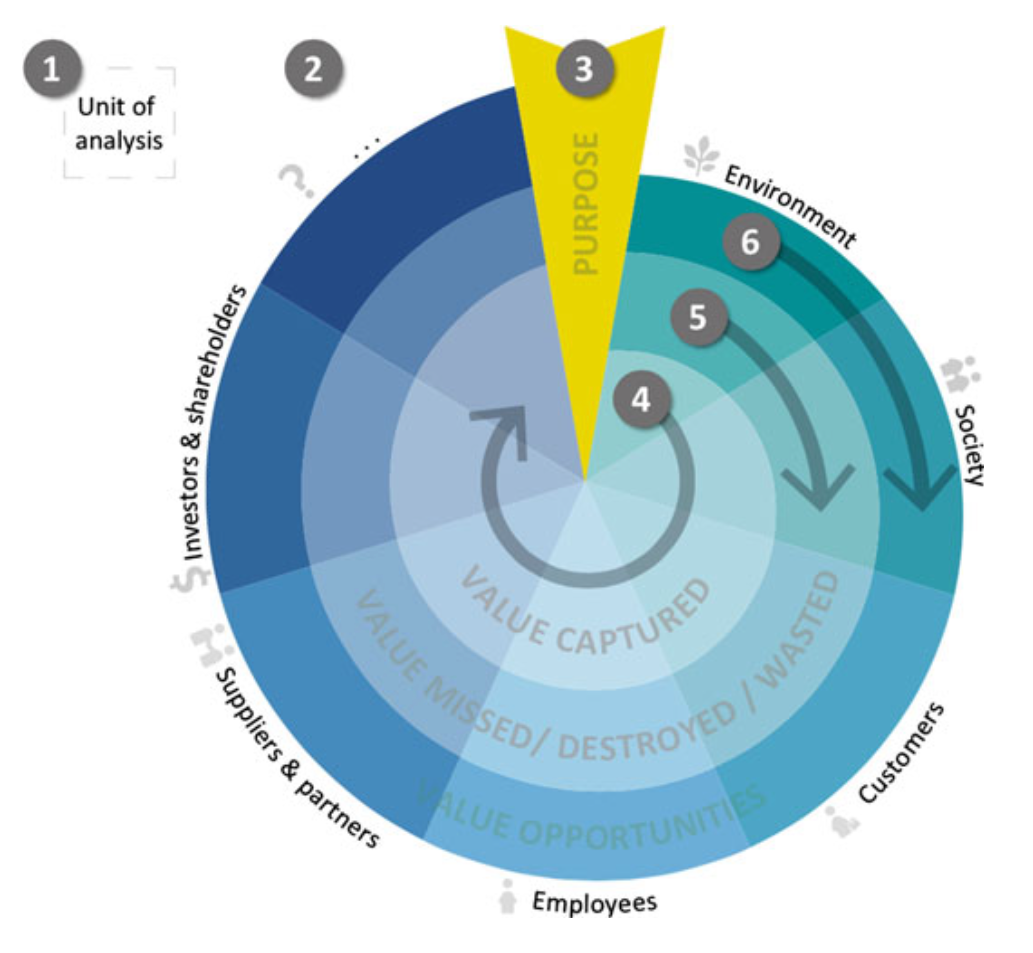
The Cambridge value mapping tool uses a methodical and visual strategy to pinpoint instances of 'value uncapture,' specifically focusing on unsuccessful value exchanges, encompassing missed, depleted, surplus, and absent values. The assessment of value exchange is conducted by considering the perspective of every stakeholder within the business network, ensuring that both the natural environment and the society are acknowledged as distinct voices with their respective stakes in the business.
Dimensions
Resource type: The Cambridge Value Mapping Tool is a practical instrument that aids in the visualization and analysis of value streams within a business context.
- Tags: tool, framework, step-by-step
Objective: This tool aims to map out and identify areas of value creation, missed opportunities, and potential for sustainable growth within a company.
- Tags: map, assess
Target audience: The tool is designed for a diverse audience, including those involved in business strategy and sustainability, making it suitable for a range of users from different sectors.
- Tags: entrepreneurs, researchers, educators, practitioners, students, corporations
Sustainability focus: With its emphasis on environmental, social, and economic aspects, the tool directly addresses the three pillars of sustainability.
- Tags: environmental-sustainability, social-sustainability, economic-sustainability
Innovation type: The tool supports innovation in business models by encouraging users to consider new ways of creating value that are sustainable and beneficial to all stakeholders.
- Tags: business-model-innovation, social-innovation
Entrepreneurship stage: It is applicable across various stages of entrepreneurship, particularly useful during the design and implementation phases where sustainable value creation is critical.
- Tags: ideation, design, development, implementation, startup, growth, scale-up, maturity
Scope of relevance: While the tool can be applied globally, it can be more or less relevant depending on the size and spread of the value chain and business.
- Tags: global, national, regional, local
Methodological approach: The tool employs a structured, step-by-step, and visual process that is both analytical and participatory, aligning with a mixed-methods approach.
- Tags: mixed-methods, theoretical-frameworks
Skill development: Users of the tool can expect to enhance their skills in systems thinking, holistic analysis, and sustainable strategy formulation.
- Tags: systems-thinking, holistic-thinking, business-and-financial-skills, value-analysis
Source and credibility: Originating from a reputable academic institution and having gone through five years of visual and conceptual iterations, the tool has been used in academic context and applied in industry workshops.
- Tags: academic-institutions, recognized-experts, research-based
Prerequisites and requirements: The tool is designed to be accessible to a wide audience, with no specific prerequisites needed for its basic application.
- Tags: none, beginner-level
Collaboration level: The tool can be used individually and in collaborative settings. The tool encourages collaboration around it across departments and functions within an organization.
- Tags: individual, team, community
More information can be found at The Cambridge Institute for Manufacturing (IfM).
Resources
Before using this tool, you should know...1 prerequisite • beginner level
Stakeholder Analysis
Basic understanding of stakeholder relationships and value exchanges
Note: Accessible to wide audience with no specific prerequisites needed.
Tool Compatibility
See which tools work well alongside Cambridge Value Mapping Tool, and which overlap with it enough that you may only need one
Complementary Tools (10)
These tools work well together with Cambridge Value Mapping Tool
Adds mapping to the assessment this tool provides, bringing circular economy into view.
Adds assessment to the mapping this tool provides, from a technological angle.
Adds mapping to the assessment this tool provides, bringing the SDGs into view.
Adds strategic alignment to the assessment this tool provides, bringing environmental impact into view.
Adds assessment to the mapping this tool provides, from a process innovation angle.
Adds mapping to the assessment this tool provides.
Related Pages
Discover related resources based on shared tags and topics
Circular Canvas
tools
Responsible Tech Playbook
tools
Sustainable Business Model Canvas
tools
Sustainability SWOT Analysis
tools
Impact Gap Canvas
tools