Sustainability Plan 101
The goal of “build a sustainability plan 101” is to provide the steps and resources to get started on a sustainability journey. The approach and tools are captured in seven essential steps. As part of each step there are tools that help guide action. The plan is loosely based on a guide about a comprehensive business case for sustainability published at Harvard Business Review.
Step 1: assess impact
1. Assessing impact
- Benchmark to peer companies
- Conduct a Life Cycle Assessment (LCA)
- Identify an issue that is important to your company and manage that first.
- Conduct a risk assessment to identify the issues/regions/products that matter most to your company.
- Reach out to an NGO for guidance
2. Life cycle assessment
3. Materiality assessment
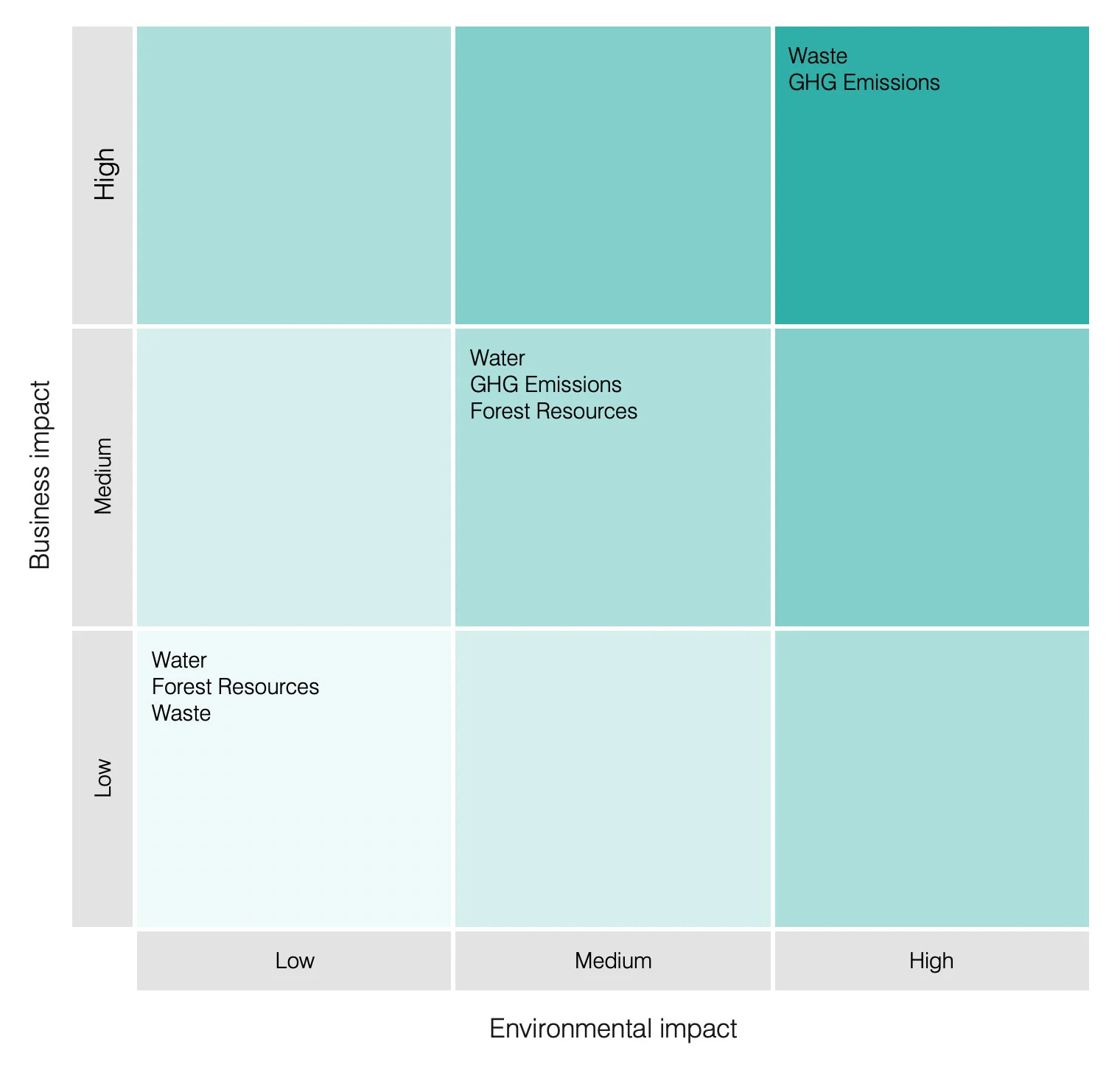
TOOL: opportunity assessment matrix
Step 2: ID stakeholders
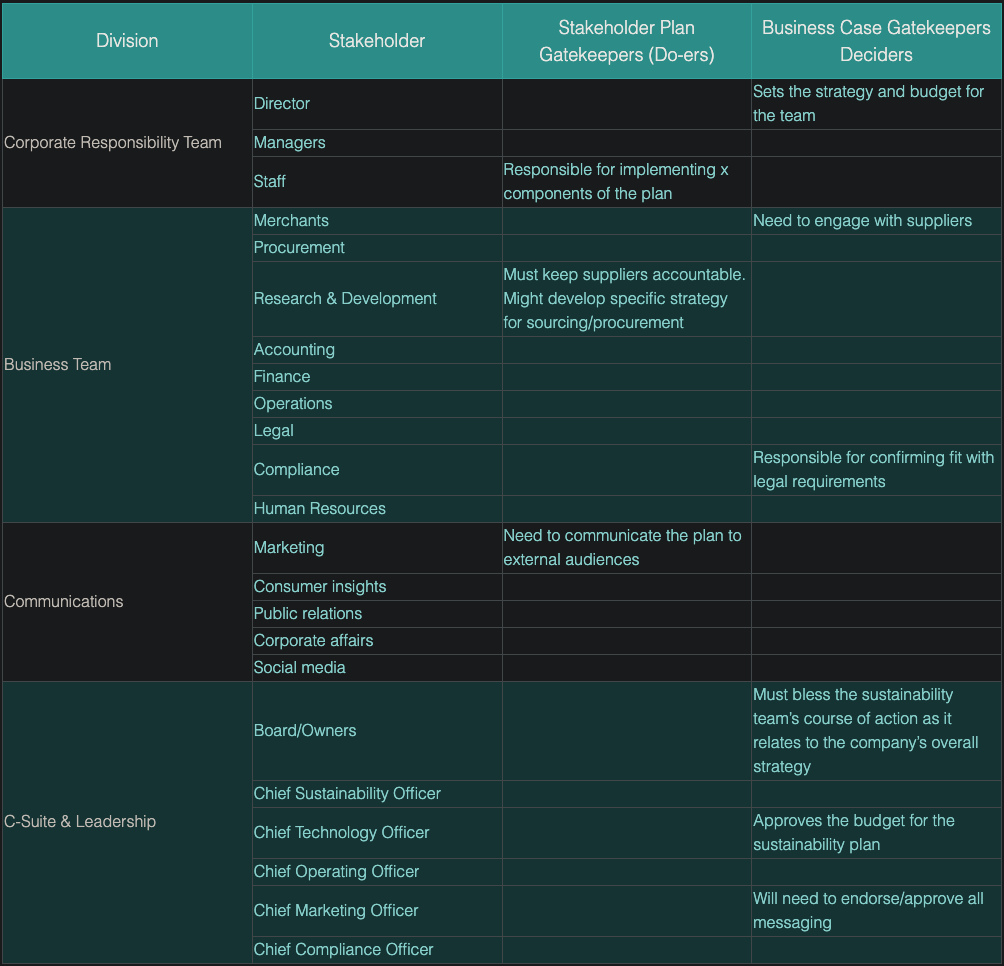
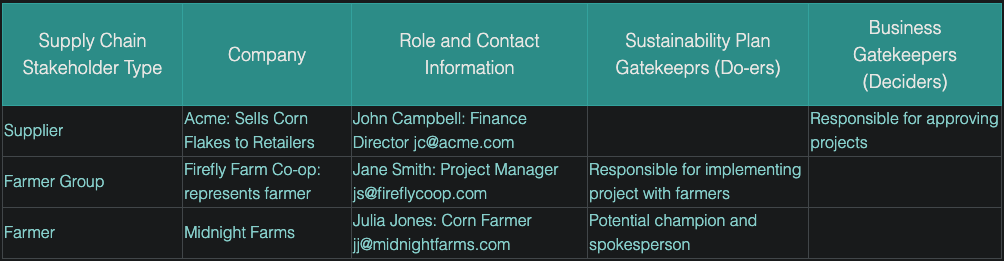
1. Identifying your "Decider" and "Do-er" stakeholders
TOOL: High level internal stakeholder chart
TOOL: High level supply chain stakeholder chart
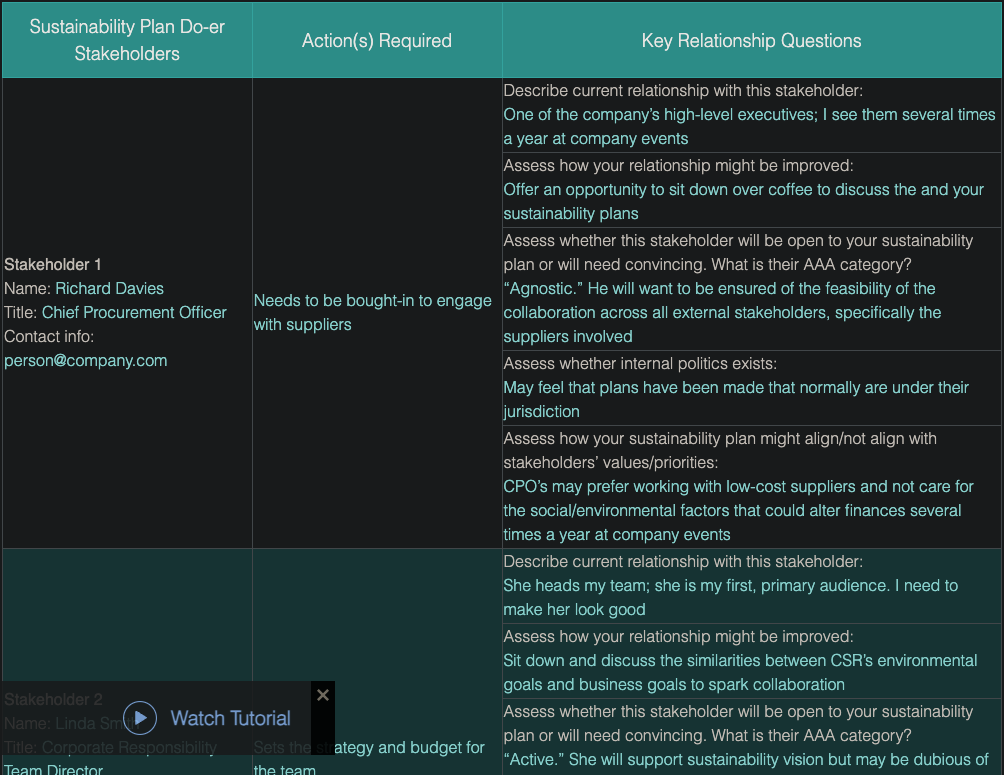
2. Understanding your "do-er" stakeholders
3. Activating your “do-er” stakeholders
TOOL: Sustainability plan do-er stakeholders
Step 3: set goals
1. Making your goals ambitious
2. Making your goals scientific
3. Making your goals align with your core business
- Step 1: focus on environmental goals
- Step 2: match environmental goals to business values
TOOL: chart your company’s existing language

TOOL: aligning environmental and business divisions

Step 4: objectives
1. Setting specific, measurable objectives
2. Identifying key performance indicators, metrics and baselines
Step 5: ID pilot projects
1. Identifying pilot site(s), existing initiatives or projects
2. Identifying stakeholders
3. Reviewing goals, metrics, KPIs, timelines; are they relevant here?
4. Engaging stakeholders and incorporate feedback
5. Presenting amended pilot plan to stakeholders to gain buy-in
Step 6: the business case
1. Understanding how your sustainability plan and your company align

2. Understanding potential drivers of change
-
Answer key stakeholder questions
-
Identify and rank drivers of change
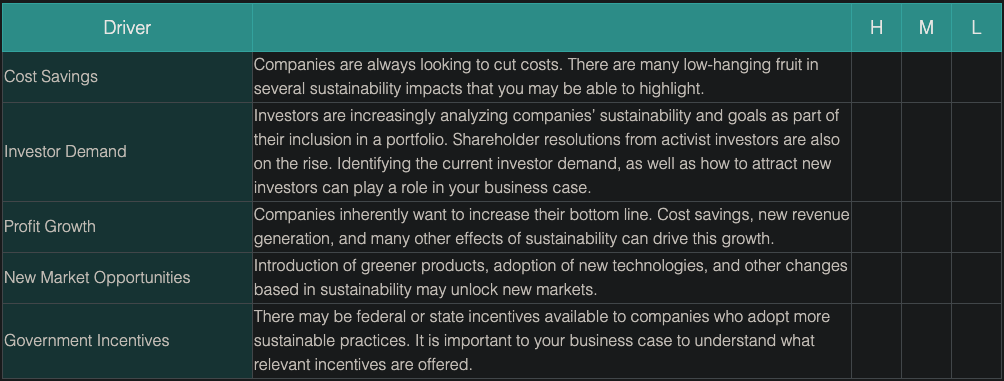
TOOL: ID and rank financial drivers of change
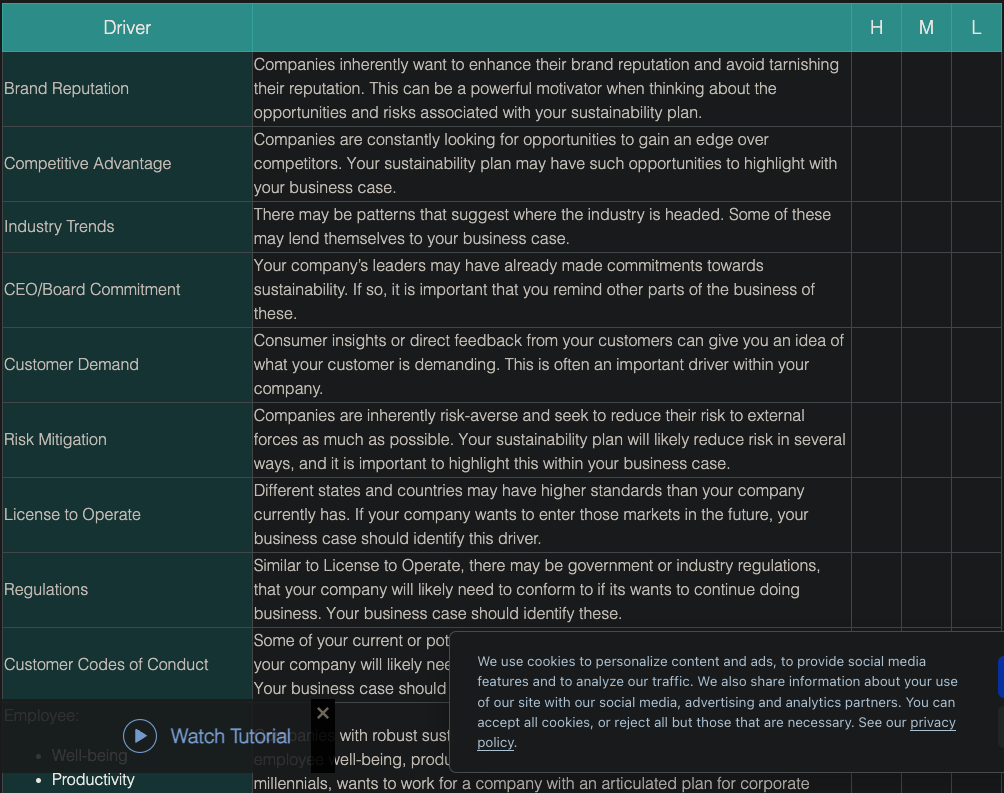
TOOL: ID and rank non-financial drivers of change
3. Identifying what motivates your decider stakeholders
-
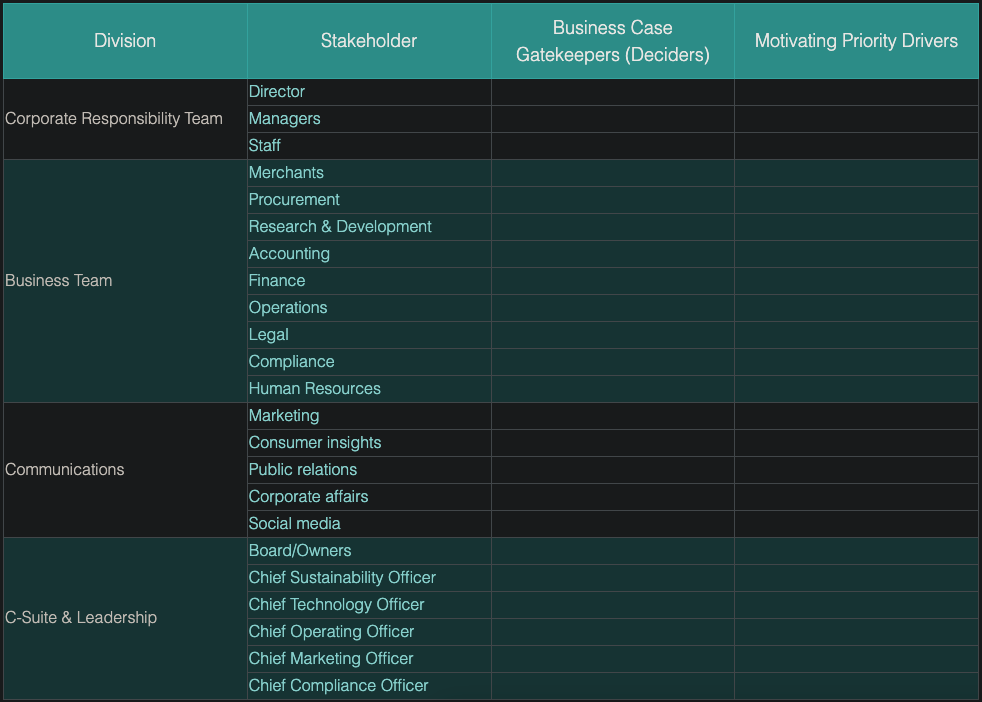
Understand motivation: both a science and an art
TOOL: Assign drivers of change to your key stakeholders
4. Activating your decider stakeholders
-
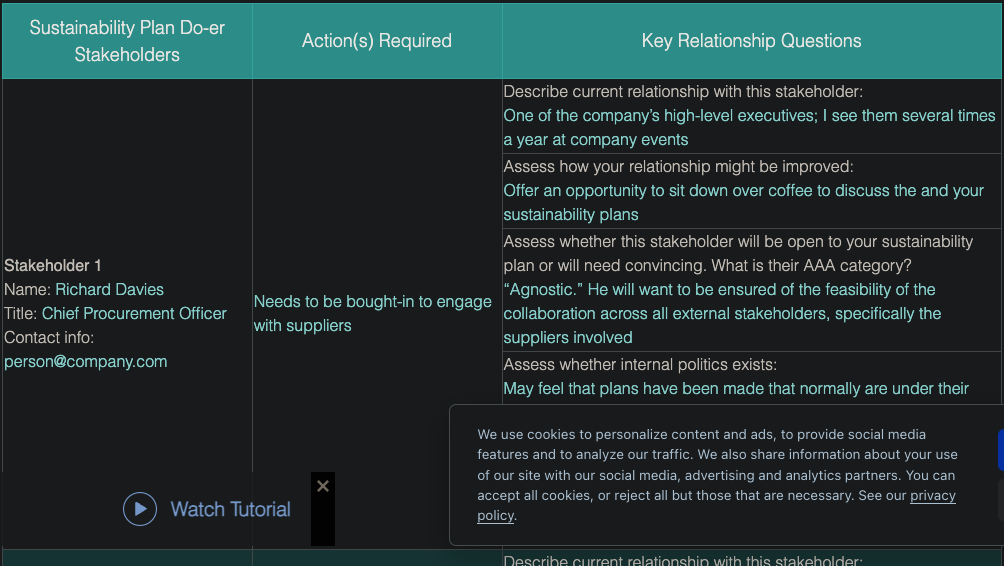
Understand allies ... and how to target those who aren't
TOOL: Activating your decider stakeholders
5. Identifying the data to be collected
-
Identify the data to be collected
- Financial data (revenues and expenses).
- Environmental impact data.
TOOL: identifying financial and environmental data and owners

-
Assign financial and environmental impact to drivers
TOOL: Estimate benefits

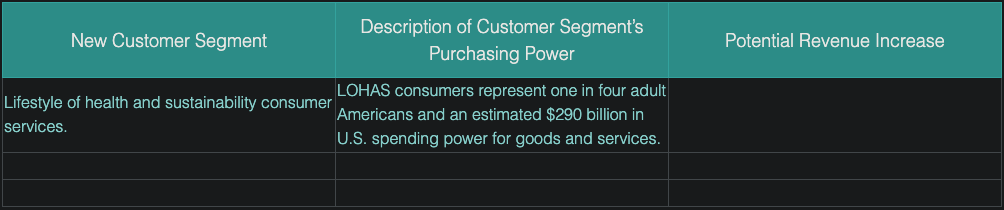
TOOL: Estimate revenue increase from new market opportunities

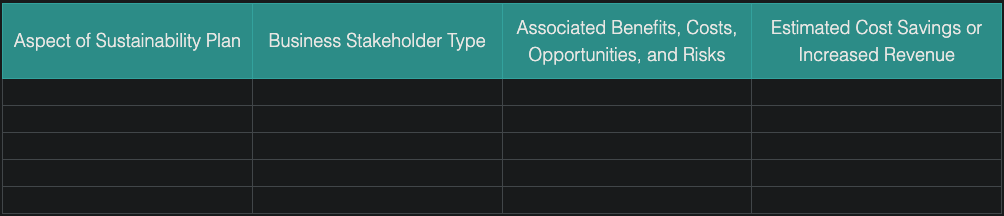
TOOL: Estimate revenue increase or cost savings from enhanced brand reputation
-
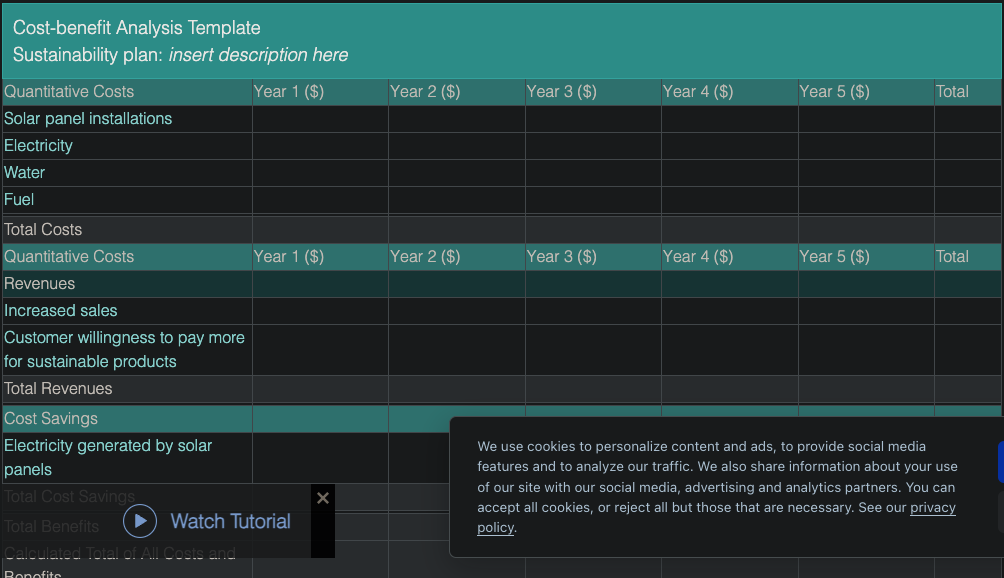
Perform a cost-benefit analysis
TOOL: Cost-benefit analysis template
-
Calculate the return on investment
-
Communicate the intangible benefits and risks
Step 7: pitch & launch
-
Know how to tell the story
Related Pages
Discover related resources based on shared tags and topics
Sustainability Assessment of Startups
tools
Sustainability Balanced Scorecard
tools
Sustainability Impact Canvas
tools
Sustainability SWOT Analysis
tools
Environmental Protection Agency (EPA) Sustainability Toolkit
collections